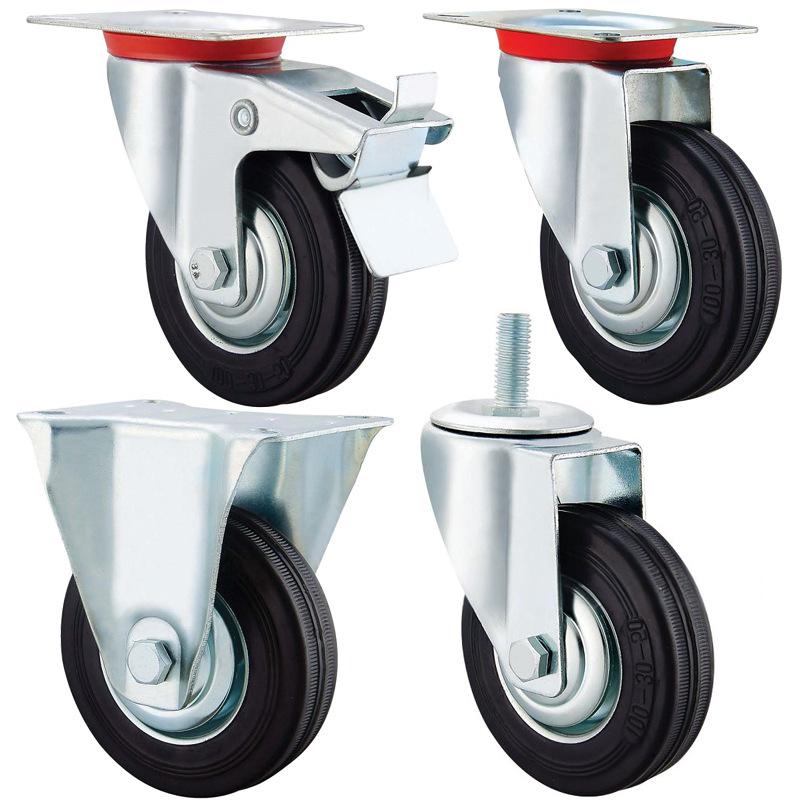
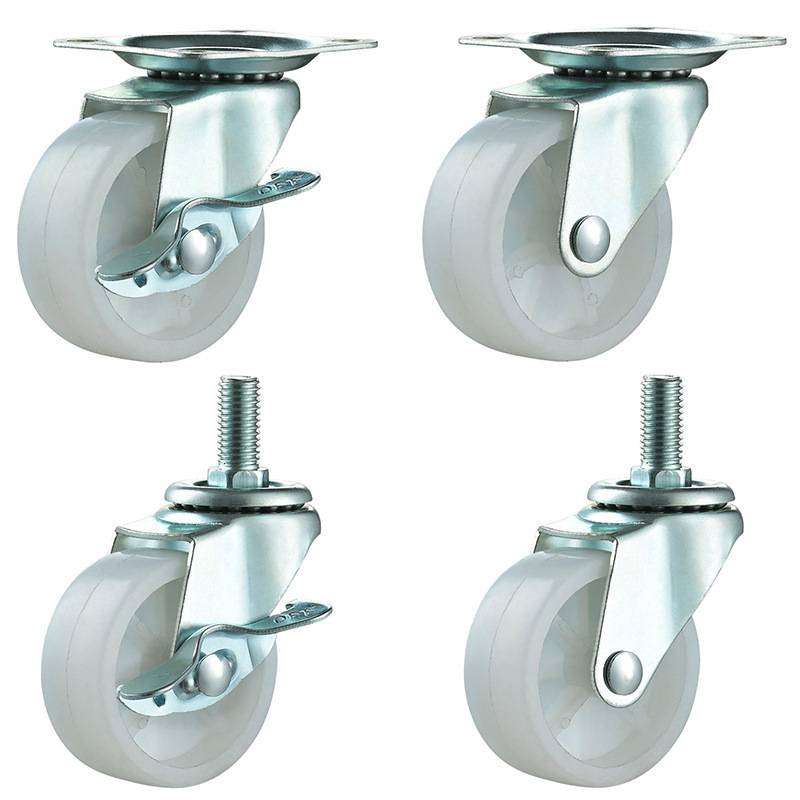
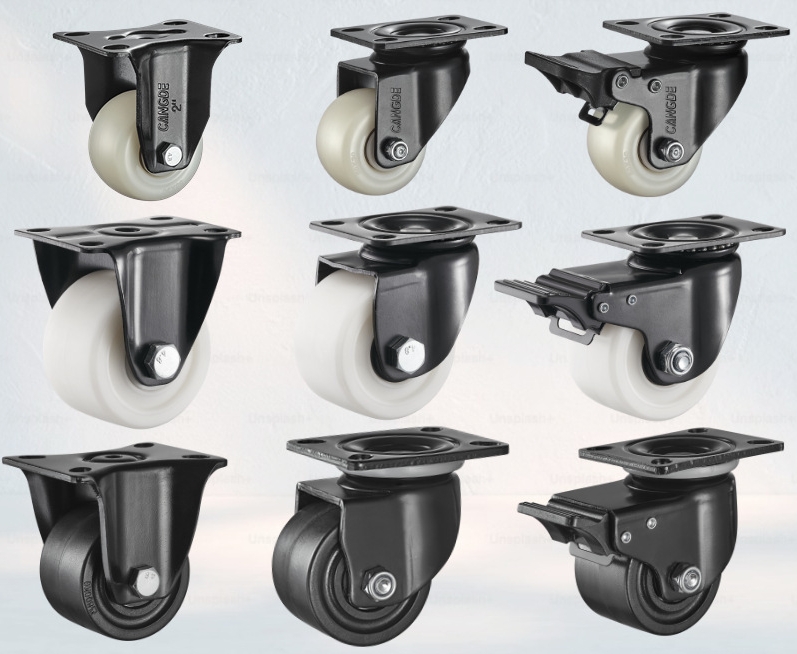
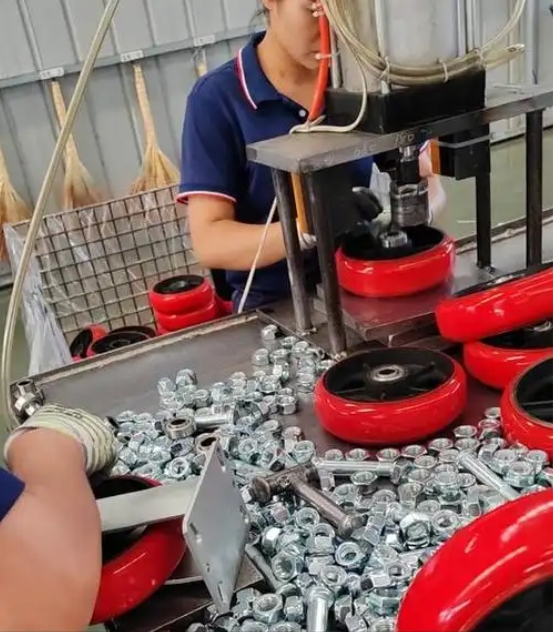
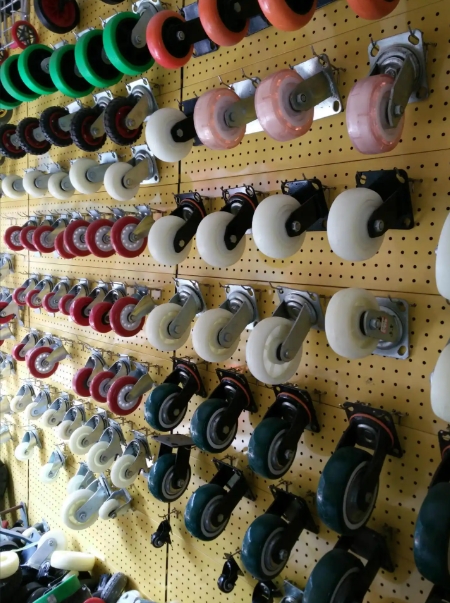
Material technology innovation improves the comprehensive performance of heavy duty castors in all aspects. Modern high-grade heavy duty castors use high-purity steel brackets with hot-dip galvanizing and electrostatic spraying double anti-corrosion treatment, which can effectively resist rust, oxidation, and acid-base corrosion, and maintain a new appearance and stable structural performance after long-term use in humid, dusty, and chemical industrial environments. The wheel body materials are diversified and upgraded: high-elasticity polyurethane wheels achieve wear resistance and mute effect; modified nylon wheels enhance low-temperature and impact resistance; ductile iron wheels improve ultra-heavy load-bearing performance. The internal bearings adopt fully sealed waterproof and dustproof design, which can prevent external impurities from entering the bearing interior, avoid bearing rust and jamming, and greatly extend the service life of castors.
Functional classification of heavy duty castors is diverse to meet different operational needs. Fixed heavy duty castors provide stable linear movement, reduce equipment shaking during transportation, and are suitable for long-distance straight-line cargo handling. Swivel heavy duty castors realize flexible steering in all directions, adapting to narrow space operation and multi-directional movement. Brake-type heavy duty castors include total brake and directional brake types: total brake can lock wheel rotation and swivel rotation at the same time to fix the equipment position; directional brake limits the swivel function to ensure linear movement, improving transportation stability. In addition, there are shock-absorbing heavy duty castors specially designed for precision equipment, which can buffer vibration during movement and protect precision instruments and equipment from damage.
Global application scenarios of heavy duty castors cover industrial manufacturing, logistics warehousing, airport port transportation, construction engineering, medical commerce, and other fields. In European and American intelligent manufacturing factories, heavy duty castors are widely used in automated production trolleys and mobile assembly platforms, adapting to high-frequency intelligent mobile operations. In cross-border logistics and warehousing centers, standardized heavy duty castors meet the unified equipment matching standards of global logistics systems, improving cargo handling efficiency. In construction and engineering fields, heavy duty castors are installed on mobile scaffolds and engineering trolleys, adapting to complex construction site environments. In commercial fields, they are used for large supermarket storage trolleys, catering transport equipment, and exhibition mobile booths, with strong durability and practicability.
The advantages of heavy duty castors in industrial application are mainly reflected in safety, efficiency, and economy. High structural strength and standardized load design avoid equipment sliding, tilting, and collapsing safety accidents caused by caster failure. Flexible rolling performance reduces manual pushing and pulling resistance, saves labor costs, and improves equipment operation efficiency. Excellent wear resistance and anti-corrosion performance reduce the frequency of replacement and maintenance, effectively reducing the long-term operating cost of industrial equipment. Compared with ordinary casters, heavy duty castors have longer service life, more stable performance, and stronger environmental adaptability, which can adapt to long-term high-intensity industrial operations.
In terms of daily use and maintenance, heavy duty castors have simple and operable maintenance methods. Users need to regularly check the tightness of mounting bolts to prevent loose installation caused by equipment vibration. Regularly clean the dust, sand, and oil stains on the wheel body and rotating parts to avoid affecting rolling flexibility. Lubricate the swivel bearing and wheel bearing every 3 to 6 months according to the use frequency to ensure flexible rotation. For castors used in extreme environments such as high temperature and chemical corrosion, the inspection frequency should be increased, and damaged parts should be replaced in time to ensure the safe and stable operation of equipment. With standardized design, superior performance, and wide applicability, heavy duty castors have become the preferred mobile solution for global industrial heavy-load scenarios.